
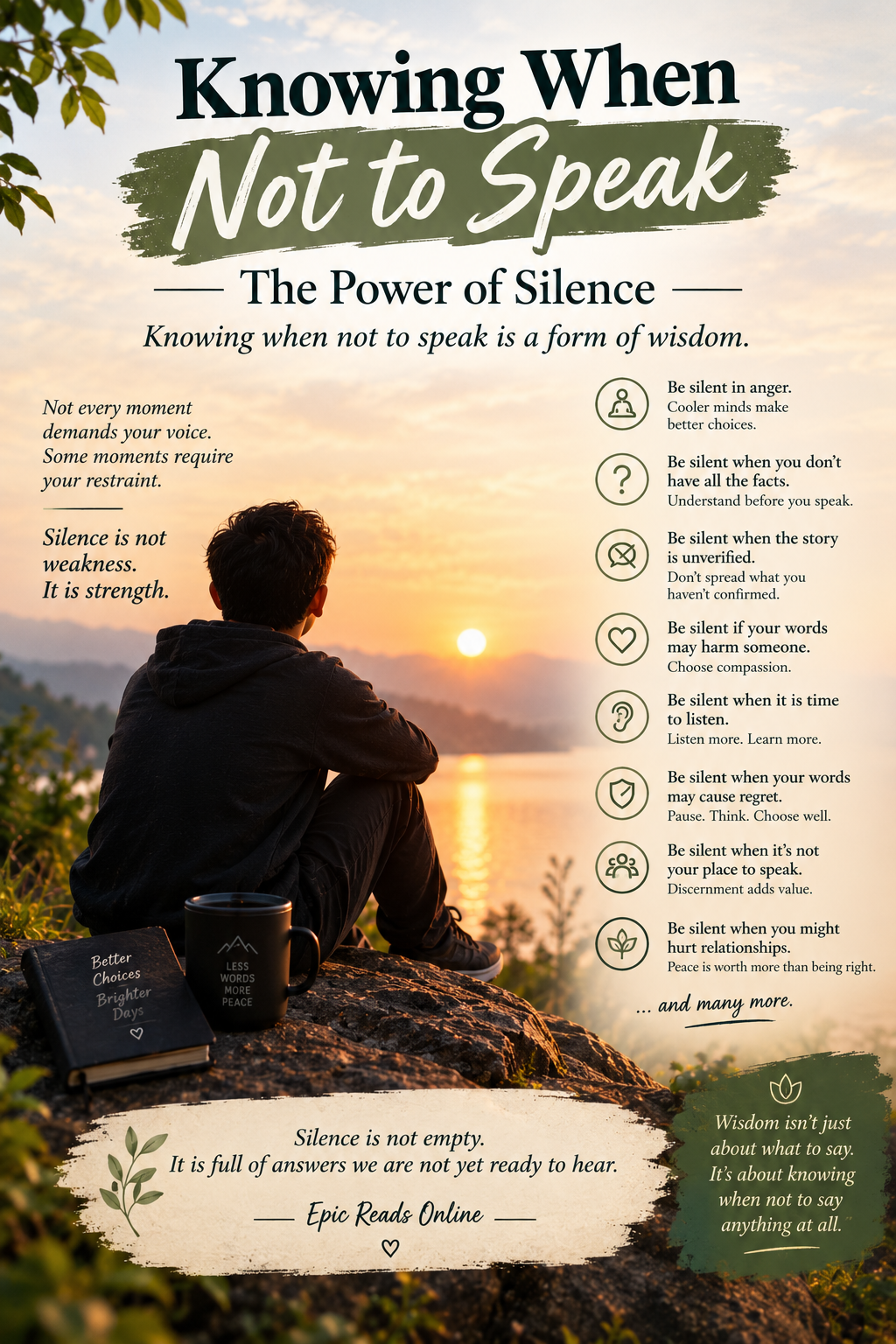
Knowing When Not to Speak: The Quiet Power of Silence
Knowing when not to speak is a form of wisdom.
🌸 In a world that constantly encourages expression—posting, reacting, replying, defending—silence often feels like weakness.
But in reality, silence is one of the most powerful forms of self-control and wisdom.
Not every moment demands your voice. Some moments require your restraint.
Knowing when to be silent isn't about suppressing yourself—it's about choosing dignity over impulse, clarity over chaos, and peace over unnecessary conflict.
The 18 Moments Silence Becomes Wisdom
💭 Be silent in moments of anger. Words spoken in the heat of emotion often carry a weight they were never meant to. Anger is temporary, but the damage caused by reckless words can last far longer.
💭 Be silent when you don't have all the facts. Half-truths and assumptions can distort reality. Speaking without understanding can mislead others and weaken your credibility.
💭 Be silent when the story is unverified. Not everything you hear deserves to be repeated. Silence protects you from becoming a carrier of misinformation.
💭 Be silent if your words may harm someone more vulnerable. Strength is not in overpowering others with words, but in choosing compassion when it matters most.
💭 Be silent when it is time to listen. Listening is not passive—it is an active, intentional act. Sometimes, the most meaningful thing you can offer someone is your full attention.
💭 Be silent when tempted to mock what is sacred or meaningful. Respect reflects character. What you choose not to ridicule says as much about you as what you choose to praise.
💭 Be silent when humor crosses into harm. Not every joke is harmless. If it comes at the cost of someone else's dignity, it isn't worth saying.
💭 Be silent if your words may become your regret. If there's even a small chance you'll wish you hadn't said it later, that's your cue to pause.
💭 Be silent when your words may be misunderstood. Clarity matters. If your message is likely to create confusion or misinterpretation, silence can be the wiser option.
💭 Be silent when it's not your place to speak. Not every issue requires your opinion. Discernment is knowing where your voice adds value—and where it doesn't.
💭 Be silent when you are tempted to lie. Silence may feel uncomfortable, but it is far better than compromising your integrity.
💭 Be silent when your words could damage someone's reputation. Gossip and careless commentary can harm others in ways that cannot be undone.
💭 Be silent when your words may harm relationships. Some arguments are not worth winning if they cost you connection and trust.
💭 Be silent when criticism is driven by emotion, not insight. Constructive feedback has its place—but reactive criticism rarely leads to growth.
💭 Be silent when you cannot speak calmly. If your voice needs to rise to be heard, your message may already be lost.
💭 Be silent when your words reflect poorly on those connected to you. Your words do not represent you alone—they echo into your relationships and circles.
💭 Be silent when you might have to take your words back. If uncertainty lingers, restraint is wiser than retraction.
💭 Be silent when you've already said enough. Repetition doesn't strengthen a point—it often weakens it. Know when to stop.
Why Silence Matters
🌸 It creates space—for understanding, for reflection, for better choices.
🌸 It protects your peace, preserves your relationships, and strengthens your character.
💎 It's about knowing when not to say anything at all.
🌸 Silence is not empty.
It is full of answers we are not yet ready to hear. — With warmth, Epic Reads Online




0 Comments
Share your feedback.